Bitcoin Mining Hosting Comparison 2026
Last updated: July 2026 · Every data point checked monthly
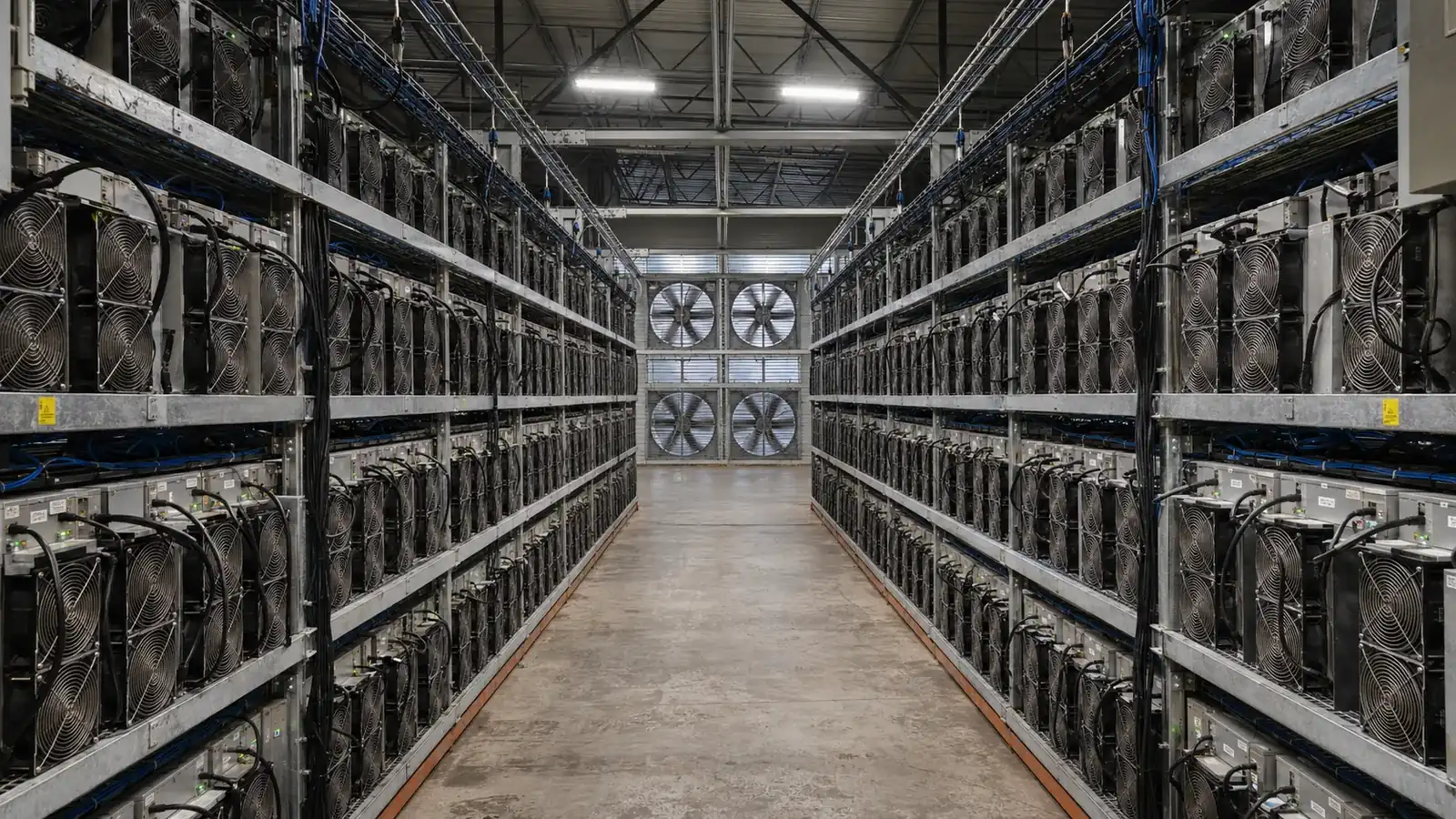
Bitcoin mining hosting means a professional data center runs your ASIC on cheap industrial power while you keep ownership of the machine and the coins. In 2026, credible all-in rates sit in a tight band of $0.065–$0.08 per kWh — so the price is rarely what separates a good host from a bad one. What actually matters is whether the operator pays out directly to your own wallet, has a verifiable track record, and is honest about the things it can't promise (like perfect uptime).
The table below ranks every provider we track by the same published methodology (price 30% · track record 30% · transparency 20% · support 20%). We don't crown a single "best" host — the right choice depends on your priorities, so use the comparison and the best-practice checklist further down to judge for yourself.
The comparison table
| Provider | Model | Since | USD/kWh | Min. term | Trustpilot | Locations | Score |
|---|---|---|---|---|---|---|---|
| Bitkern Group Top Pick | Hosting | $0.045* | 48 mo | 4.9 (31) | USA, Finland, UAE +2 | 8.5/10 | |
| Hashlabs | Hosting | $0.072 | 1 mo | 4.7 | USA, Norway, Finland +1 | 7.9/10 | |
| Simple Mining | Hosting | $0.080 | none | 4.7 (28) | USA | 7.7/10 |
Show all 17 providers (14 more)
| Provider | Model | Since | USD/kWh | Min. term | Trustpilot | Locations | Score |
|---|---|---|---|---|---|---|---|
| Startmining | Hosting | $0.057* | — | — | Iceland, USA, Canada +1 | 7.7/10 | |
| Antminer Distribution Europe | Broker | $0.064* | 12 mo | 5 | Norway | 7.5/10 | |
| Blockware Solutions | Hosting | $0.078 | 12 mo | — | USA | 7.3/10 | |
| Luxor | Broker | on request | — | — | Marketplace — no own facilities | 7.3/10 | |
| Cryptohall24 | Hosting | $0.066* | 12 mo | 4 (47) | Finland, Norway, UK +1 | 7.2/10 | |
| Sazmining | Hosting | on request | 12 mo | 4 (66) | Paraguay, Norway, Ethiopia | 7.0/10 | |
| Hamus Hosting | Hosting | $0.060* | 12 mo | — | Norway, Norway, Mo i Rana | 7.0/10 | |
| Mining Store | Hosting | on request | — | 3.6 (3) | USA | 6.8/10 | |
| Bitdeer | Cloud | on request | 6 mo | 2 (17) | USA, Norway, Bhutan | 6.3/10 | |
| Frontier Mining | Hosting | on request | — | — | USA, USA | 6.3/10 | |
| NiceHash | Marketplace | on request | none | 1.3 (712) | Hashpower marketplace — no own facilities | 6.0/10 | |
| Compass Mining | Marketplace | $0.080* | none | 3.3 (789) | USA, Canada | 5.7/10 | |
| ASIC Jungle | Broker | on request | none | — | Partner network | 5.5/10 | |
| ECOS | Cloud | on request | 1 mo | 2.3 (2000) | Armenia | 4.8/10 |
The 2026 mining economy: why hashprice compression changes everything
Hashprice — the daily revenue a miner earns per unit of hashrate — collapsed to roughly $29–30 per PH/s per day in Q1 2026, a five-year low, down from a peak near $63 per PH/s per day in Q4 2025 (CoinShares Bitcoin Mining Report Q1 2026; Hashrate Index). With network hashrate now around 1 ZH/s, the same machine earns far less than it did a year ago — and that single number reshapes every hosting decision.
Two forces did the damage. The 2024 halving cut the block subsidy in half, and total network hashrate kept climbing to roughly 1 ZH/s (about 1.02 ZH/s by July 2026) as more efficient machines came online. Revenue per terahash is a function of both, so when subsidy falls and difficulty rises, the reward for each unit of work shrinks. CoinShares estimates that at these levels 15–20% of older miners are running at a loss — burning more in electricity than the coins they produce are worth.
For a hosting customer, the practical takeaway is blunt: efficiency and the kWh rate now decide profitability, not brand or marketing. At compressed hashprice, only modern ASICs below roughly 19 J/TH reliably clear their power cost, and every cent on the electricity rate matters more than it did during the 2025 highs. A cheap machine on a cheap rate can still lose money if its efficiency is poor; a top-tier ASIC on a bad rate can too. Model your exact machine and rate in the mining calculator before you commit — the margin is now thin enough that the assumptions decide the outcome.
The one risk that matters: can you trust them with your machine?

The single biggest risk in hosted mining isn't the electricity price — it's counterparty risk. Your ASIC physically sits inside someone else's building, on someone else's power contract, in someone else's jurisdiction. If that operator gets sanctioned, sued, hacked or simply goes quiet, saving one cent per kWh means nothing. Track record beats price.
This is not theoretical. In our provider data, Compass Mining lost customer machines stranded in Russia after 2022 sanctions, went through a CEO resignation and hosting-partner lawsuits, and faced a 2023 customer lawsuit over miners that were never returned — while carrying a 3.3 Trustpilot score across 789 reviews. NiceHash, the reference hashpower marketplace, was hacked in December 2017 for roughly 4,700 BTC by the Lazarus Group (later named in a 2021 DOJ indictment); it survived and repaid users through a repayment program, but the episode is a permanent reminder that "your funds sit on our platform" is itself a risk. We record every documented event in the provider reviews under a "known incidents" line, and we never invent one.
The practical defence is ownership and custody. A host that pays direct to your own wallet can't freeze your coins, and a serial-numbered machine you legally own is easier to recover than a "hashrate balance" on a dashboard. Before you send hardware or money, run the operator through the scam check and confirm the legal entity, the payout path and whether anyone else has ever had to sue to get their gear back.
Hosting vs. broker vs. public miners — what we do and don't list
A hosting operator runs the facility while you retain the ASIC and, where stated, receive payouts to your own wallet. A broker or marketplace instead introduces a third-party host, so its terms can vary by partner. We label those models rather than scoring them as identical; public mining-company shares are not hosting offers. See the provider reviews for each model.
Why "100% uptime" is a red flag, not a feature
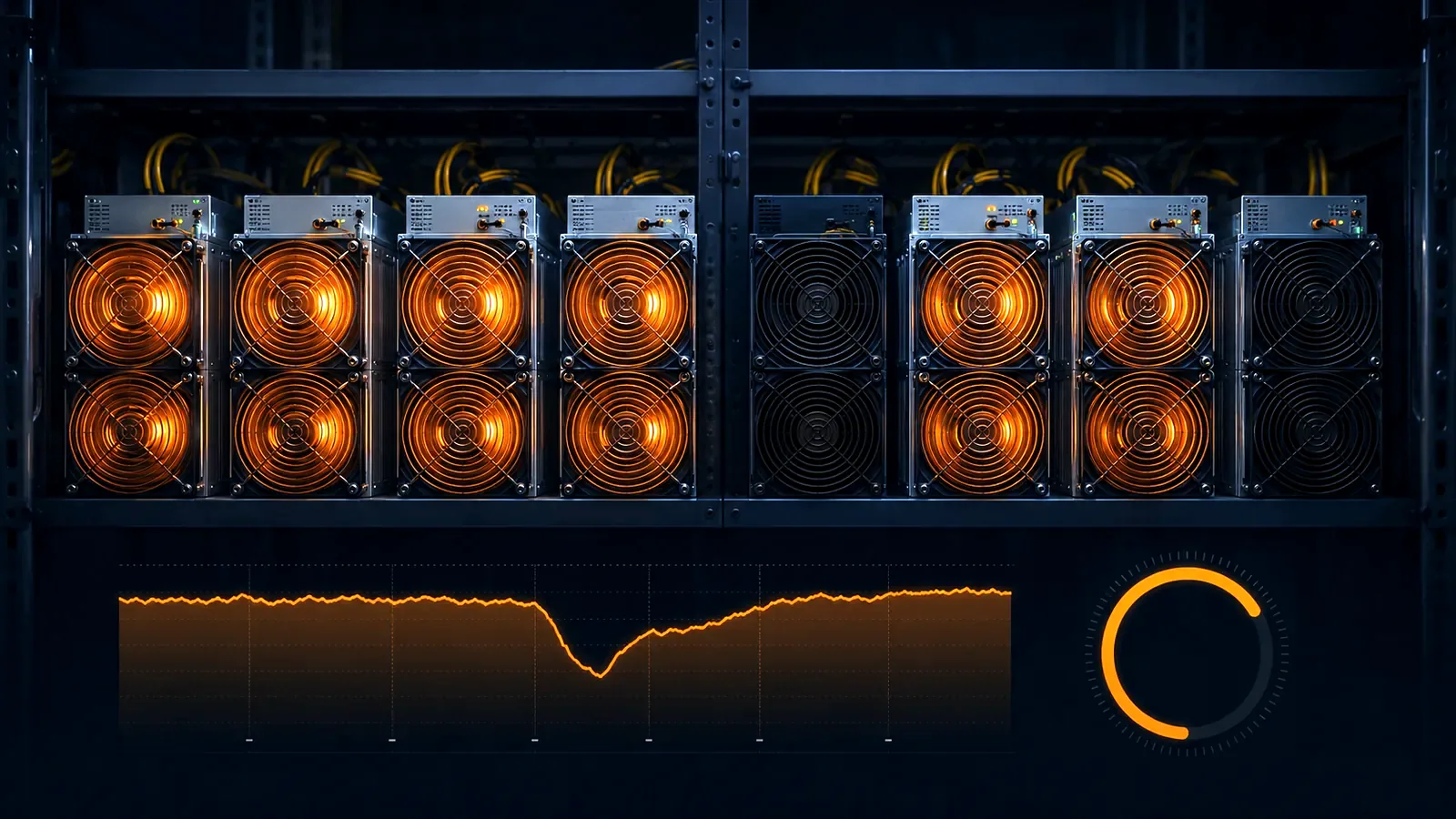
If a hosting provider advertises "100% uptime," treat it as a marketing claim, not a guarantee. Large mining farms buy cheap power precisely because they agree to curtail — to power down when the grid is stressed or spot prices spike. Flexible load is, by definition, planned downtime. An honest host tells you this; a dishonest one hides it behind a round number.
This is exactly why we deliberately do not rank providers on a headline uptime percentage. Almost no operator in our data publishes a verifiable, audited uptime figure — the uptimePct field is empty for every provider we track, which tells you how unreliable self-reported numbers are. Bitdeer, for example, has had ERCOT curtailment payments debated publicly: getting paid to switch off is a legitimate business model, but it is the opposite of "always on." What matters instead is whether the operator is transparent about curtailment policy, publishes a real status page, and documents outages honestly. We surface documented outages in the "known incidents" line rather than trusting a marketing figure.
The realistic benchmark is 95–98% effective uptime over a year, and the right question to ask a sales rep is not "is it 100%?" but "when you curtail, do I keep mining on backup power, or do my machines just stop — and is that time credited?" Model both scenarios in the calculator before you sign.
Own the machine, or rent a contract?
There are three different things sold under the word "mining," and they are not interchangeable. Pure hosting: you buy the ASIC, you own it, the host just supplies power, cooling and connectivity. Mining-as-a-service (MaaS): the provider sources and manages the hardware for you but you still own a specific, serial-numbered machine. Cloud mining: you own a contract for hashrate — no hardware, no asset, just a promise.
That last distinction is the one that separates people who keep their money from people who lose it. With hosting and MaaS you hold an asset you can resell, relocate or repair; providers such as Blockware (operating since 2017) and Simple Mining sell you a real machine. Cloud mining sells a paper claim, and it is the segment with the highest historical fraud density — which is why ECOS, an Armenian cloud operator in our data, carries a 2.3 Trustpilot score across ~2,000 reviews and a high-risk warning label despite running a genuine 60 MW facility. The infrastructure being real does not make the contract safe.
Rule of thumb: if you can't identify the exact machine you own and the wallet your coins land in, you're renting a contract, not mining. Read the full breakdown on the cloud mining page and screen any hashrate-only offer through the scam check before committing a cent.
How to choose a hosting provider
- Price (30% of our score): Everything above $0.08/kWh needs a justification (e.g. premium location, insurance). Watch for hidden setup fees.
- Track record (30%): Founding year, incident history, verifiable payouts. A provider operating since 2018 has survived two halvings — that matters.
- Transparency (20%): Public facility locations, status pages, real company registry entries, named leadership.
- Support (20%): Response times, SLA, replacement handling for failed units.
What is a fair hosting price in 2026?
In this comparison, a published all-in rate around $0.065–$0.08 per kWh is the practical starting benchmark, not a guarantee of total cost. Compare the energy rate with the stated deposit, setup fee and minimum term before signing. A lower quoted rate can still cost more after extras; use the price index and calculator to test the same miner and assumptions.
What a modern ASIC actually costs to run (OPEX table)
Power is the dominant operating cost in hosted mining, and the number that decides whether a machine earns or bleeds is J/TH — joules of electricity per terahash. The table below shows the monthly power bill (24/7, 730 hours) for four common machines across three realistic hosting rates. The lesson is immediate: an efficient 2024-generation ASIC and a legacy S19 Pro can cost almost the same to run per month, but the S19 Pro produces a fraction of the hashrate for that power — at 2026 hashprice it is often unprofitable regardless of the rate.
| ASIC model | Hashrate / efficiency | Power | @ $0.06 (6¢) | @ $0.08 (8¢) | @ $0.12 (12¢) |
|---|---|---|---|---|---|
| Antminer S21 XP | 270 TH/s · ~13.5 J/TH | 3,645 W | ~$160 | ~$213 | ~$319 |
| Antminer S21 Pro | 234 TH/s · ~15 J/TH | 3,510 W | ~$154 | ~$205 | ~$307 |
| Antminer S21+ Hydro | 358 TH/s · ~14 J/TH | 5,012 W | ~$217 | ~$289 | ~$433 |
| Antminer S19 Pro (legacy) | 110 TH/s · 29.5 J/TH | 3,250 W | ~$140 | ~$187 | ~$281 |
Power cost only (watts × 730 h × rate ÷ 1000); excludes setup, slot and maintenance fees. Efficiency and hashrate figures per Startmining, "Is Bitcoin Mining Profitable 2026".
Read the rows against hashprice, not against each other. The S19 Pro draws almost as much power as an S21 Pro but delivers barely half the hashrate, so at ~$29–30 per PH/s per day it frequently earns less than its own electricity — the classic profile of the 15–20% of machines CoinShares flags as loss-making. Efficiency beats everything else: a machine under ~19 J/TH survives a bad rate far better than an inefficient one survives a good rate. Plug your own machine, rate and BTC-price assumptions into the mining calculator to see the full revenue-minus-OPEX picture, not just the power bill.
EU vs. US hosting — what's different?
Our provider data currently labels four entries as EU and three as US; the label describes the provider's commercial region, not every facility it may use. EU entries include Nordic-hosting options, while the US entries include Iowa, Texas and marketplace-based businesses. Region alone is not a quality score: compare the listed location, price disclosure, contract and payout model before choosing.
One structural difference worth knowing if you mine as a US business: under IRC §168(k) bonus depreciation, ASIC hardware can qualify for accelerated first-year depreciation, which can meaningfully lower the after-tax cost of buying miners. That is a tax-code advantage of the jurisdiction, not of any single provider, and it does nothing for EU buyers — always confirm eligibility and treatment with your own tax advisor before factoring it into a payback calculation.
Repair & uptime: what happens when your miner breaks?
ASICs fail — hashboards die, PSUs blow, fans seize. The question that decides your real-world uptime is not "will it break?" but "how fast does it get fixed?" A host with an on-site repair bench can swap a hashboard in days; a host that ships your unit back to a manufacturer queue can leave it dark for 90 days or more. During that time you earn nothing while power and slot fees may keep running.
This is a genuine differentiator in our data, not a hypothetical. Simple Mining runs a repair center on site, which is exactly the setup that keeps turnaround measured in days. At the other end, Frontier Mining's own site testimonial reports units shutting down in summer heat — an operational-quality flag (not fraud) that shows how climate and facility engineering feed directly into downtime. Before you sign, ask the operator three blunt questions: where does my device physically go when it fails, who pays shipping, and is billing paused while it's out of service?
Also confirm what a failure does to your contract. Some agreements bill the slot even while the machine is dead, and a few — like Sazmining's year-one clause — can forfeit hardware if you cancel early. Read the small print on repair SLA, replacement units and downtime credits, then sanity-check the annual cost of realistic downtime in the mining calculator.
Why AI and HPC data centers are shrinking your hosting options
Key fact: An AI-ready data center costs $8–15 million per MW to build versus $0.7–1 million per MW for Bitcoin-mining capacity, so listed operators have signed more than $70 billion in cumulative AI/HPC contracts — pulling megawatts away from third-party ASIC hosting.
A quieter force is reshaping where you can host in 2026: publicly traded miners are converting megawatts of power and data-center capacity from Bitcoin mining to AI and high-performance computing (HPC), backed by more than $70 billion in cumulative contracts across the listed sector (CoinShares Bitcoin Mining Report Q1 2026). The reason is pure economics — the same megawatt earns far more running GPUs for AI than it does running ASICs.
The cost and revenue gap is stark. CoinShares puts the infrastructure cost of Bitcoin-mining capacity at roughly $0.7–1 million per MW, versus $8–15 million per MW for AI-ready data centers — but AI tenants pay a large premium for that build-out, and on long contracts. When operators such as those trading under tickers WULF, CORZ, CIFR, HUT and IREN can sign multi-year AI deals at those rates, the incentive to keep low-margin retail mining slots online falls away. We name these as a public market observation, not a recommendation.
For a retail hosting customer the consequence is direct: as diversified operators pivot toward AI, the pool of megawatts available for third-party ASIC hosting shrinks, which tightens supply and can push hosting prices up. It also raises the relative importance of the specialised proof-of-work operators that stay in mining — the ones whose entire business is hosting your machine, not renting the same building to a hyperscaler. When you evaluate a host in 2026, ask whether mining is its core business or a soon-to-be-converted side line, because a facility earmarked for an AI retrofit is not a stable long-term home for your miner.
Firmware & hashrate routing: the margin lever most miners ignore
Key fact: Custom firmware such as LuxOS or NiceHash can improve real-world J/TH by several percent — at thin margins that is the line between a profitable and a loss-making machine, provided your host lets you flash it.
With hashprice compressed, the difference between a profitable machine and a loss-making one can come down to firmware and where you send the hashrate. Custom firmware — such as LuxOS from Luxor or NiceHash firmware — adds auto-tuning, undervolting and overclocking that stock firmware doesn't (Luxor Technology). Used well, it can improve real-world J/TH by several percent, which at thin margins is the line between green and red.
The tuning logic follows the market. When difficulty is high and hashprice is low, undervolting drops power draw and improves efficiency — you give up a little hashrate to protect margin. In a bull run, when each terahash is worth more, overclocking pushes the same machine harder to capture the upside. Auto-tuning firmware can shift between these modes automatically instead of leaving the machine on fixed factory settings that are optimal in neither regime.
Routing matters just as much. Most pools pay FPPS (full pay-per-share), giving you steady, predictable revenue including transaction fees. A hashrate marketplace instead lets you sell your hashrate to the highest bidder, which can pay more when demand spikes but is more volatile. Neither is universally better — it depends on your risk tolerance. The question to put to any host before signing is simple: may I flash custom firmware, and may I point the machine at my own pool or marketplace? Hosts that lock both the firmware and the pool configuration take that entire margin lever out of your hands.
What to do this week
If you're serious about hosted mining, four concrete moves this week will save you far more than chasing the cheapest kWh. Start small, get real numbers behind a login, read the contract for the traps above, and take custody of your coins. None of these steps costs anything, and together they eliminate most of the ways beginners lose money.
- Start with one machine, not a fleet. A single S21 tells you whether the payouts, dashboard and support are real before you scale. Model that one unit in the mining calculator at $0.065–$0.08/kWh first. For context on the wider economics: CoinShares' Q1 2026 Bitcoin Mining Report put the listed miners' all-in cost near $140,000 per BTC and cash cost around $58,000, while Simple Mining's June 2026 analysis estimated $32,000–$55,000 in hosting and power to produce one BTC — so your margin lives or dies on the power rate.
- Pull the logged-in rate card. Public "from" prices are marketing. Several operators (ECOS, Mining Store, Frontier) only quote real numbers behind a login or a contact form — get the actual deposit, setup fee, slot fee and term in writing before comparing.
- Read the contract for the four traps: minimum term, early-cancel hardware forfeiture, curtailment/downtime credits, and repair turnaround. Cross-check the operator against our provider reviews and the scam check.
- Self-custody your coins. Insist on payouts direct to a wallet you control, not a platform balance. This is the single biggest counterparty-risk reducer and it costs nothing to demand up front.
Frequently asked questions
What does Bitcoin mining hosting cost in 2026?
All-in hosting rates range from $0.065 to $0.08 per kWh in mid-2026. For an Antminer S21 (3,500 W) that translates to roughly $180–$205 in monthly power costs per unit.
What does hosting cost per kWh?
Credible all-in hosting rates sit in a $0.065–$0.08/kWh band in mid-2026. Below ~$0.05/kWh usually means a revenue-share model or a spot-linked tier, not a fixed price — read the contract before comparing on the headline number alone.
Is hosted mining safe?
Hosted mining is as safe as the operator you trust with your machine. Your ASIC sits physically in someone else’s building, so the real risk is counterparty risk, not the kWh price. Prefer hosts that pay direct to your own wallet, publish a track record and disclose incidents.
Do I own the miner?
With pure hosting and mining-as-a-service, yes — you own the ASIC and the coins, the host only runs it. With cloud mining you own a contract, not hardware. If ownership matters, avoid contracts that sell hashrate without a serial-numbered machine.
What is a good uptime for a hosting provider?
The industry benchmark is 95–98%. Providers publishing a status page or verifiable uptime history rate higher in our methodology.
Hosted mining vs. cloud mining — what is the difference?
With hosted mining you own the ASIC and the provider operates it in their facility. Cloud mining sells you a hashrate contract without hardware ownership — a segment with historically high fraud density.
How do I avoid mining scams?
Check founding year and company registry, demand payout proofs, prefer direct-to-wallet payouts, and avoid providers promising fixed returns. Our reviews document incident history for every provider.
What is hashprice and why does it matter?
Hashprice is the daily revenue a miner earns per unit of hashrate. In Q1 2026 it fell to roughly $29–30 per PH/s per day — a five-year low, down from a ~$63 peak in Q4 2025. For a hosting customer it is the single number that decides whether a machine is profitable: at compressed hashprice, only efficient ASICs under ~19 J/TH and a low kWh rate keep you in the black.
Can I use custom firmware on a hosted miner?
It depends on the host. Custom firmware such as LuxOS or NiceHash firmware unlocks auto-tuning, undervolting and overclocking that can meaningfully improve your J/TH — but many hosts lock the firmware and pool configuration. Ask before you sign whether you may flash custom firmware and point the machine at your own pool.
Why are hosting options shrinking in 2026?
Public mining companies are converting megawatts of data-center capacity to AI and HPC workloads, backed by more than $70 billion in cumulative contracts, because AI infrastructure earns far more per megawatt than Bitcoin mining does. That pulls retail hosting capacity off the market and raises pressure on the specialised proof-of-work operators that remain.
Affiliate disclosure: Some outbound provider links may be affiliate links. They never influence scores — every provider is rated by the same published methodology.